Content planning
Festival posts for Indian businesses: how to plan them without sounding like everyone else
Plan festival posts for an Indian business: choose the right days, plan three weeks ahead, ideas beyond the greeting card, honest offers and a planning table.
On Diwali morning, scroll through Instagram and count how many posts are a diya, a rangoli border, a logo and the words “Wishing you a happy and prosperous Diwali”. Most of them are from businesses. Most of them are forgotten by the next scroll.
Festivals are the busiest moments of the year for many Indian businesses, and the moments when people are most open to hearing from them. But a greeting card with a logo is the weakest thing you can post. This guide shows how to choose which festivals to post for, plan them early, and make posts that are about your business and your customers, not only the date.
Step 1: Choose the days that matter to your customers
India has more festivals and observances than any business can post for. Trying to cover all of them leads to rushed, generic posts. Pick deliberately.
Sort the year into three groups:
- Big days for your customers. The festivals your customers actually celebrate and spend around. For most businesses that includes some of Diwali, Holi, Eid, Christmas, Ganesh Chaturthi, Navratri and Durga Puja, Raksha Bandhan, and the regional new year (Ugadi, Gudi Padwa, Vishu, Puthandu, Baisakhi, Bihu, Pohela Boishakh).
- Regional and local days. Pongal, Sankranti or Lohri; Onam; Karnataka Rajyotsava, Kerala Piravi or your state’s formation day; a city’s own festival or a local temple fair. These often matter more to a neighbourhood business than national ones, and fewer businesses post for them well.
- Days tied to what you do. Awareness and professional days connected to your field: World Heart Day for a cardiology clinic, Teachers’ Day for a coaching centre, World Environment Day for a solar installer, Pharmacist Day for a pharmacy, Engineers’ Day for a technology firm.
For a typical local business, eight to twelve days a year done well is better than forty done badly.
A few points to keep in mind:
- Many festivals follow the lunar calendar, so their dates move every year. Check the date for the current year before you plan; do not reuse last year’s calendar.
- Some festivals are celebrated on different days in different regions, or over several days. Post on the day your customers celebrate.
- Be careful with religious imagery. Use symbols and greetings respectfully and correctly, and if you are not sure how a festival is greeted or depicted, ask someone who celebrates it.
Step 2: Plan three weeks ahead
Festival posts made the night before are the ones that end up generic. For each chosen day, work back:
| When | What to do |
|---|---|
| 3 weeks before | Decide the idea, any offer and its terms, and what photos you need |
| 2 weeks before | Take the photos or video; write the posts |
| 1 week before | Approve everything; schedule it |
| 2–5 days before | Post the build-up: preparations, the offer, opening hours |
| The day | One warm, simple post; reply to every comment |
| Day after | Thank customers; share a photo of the day, with permission |
Holiday hours belong in the plan too. Update your Google Business Profile’s special hours for festival days, and say in a post when you are closed or open late. Wrong festival hours are a common reason for an angry review.
Step 3: Make it about your business, not only the date
The test for any festival post: if you removed the logo, could it belong to any business at all? If yes, it needs more of you in it.
Ideas that work better than a greeting card:
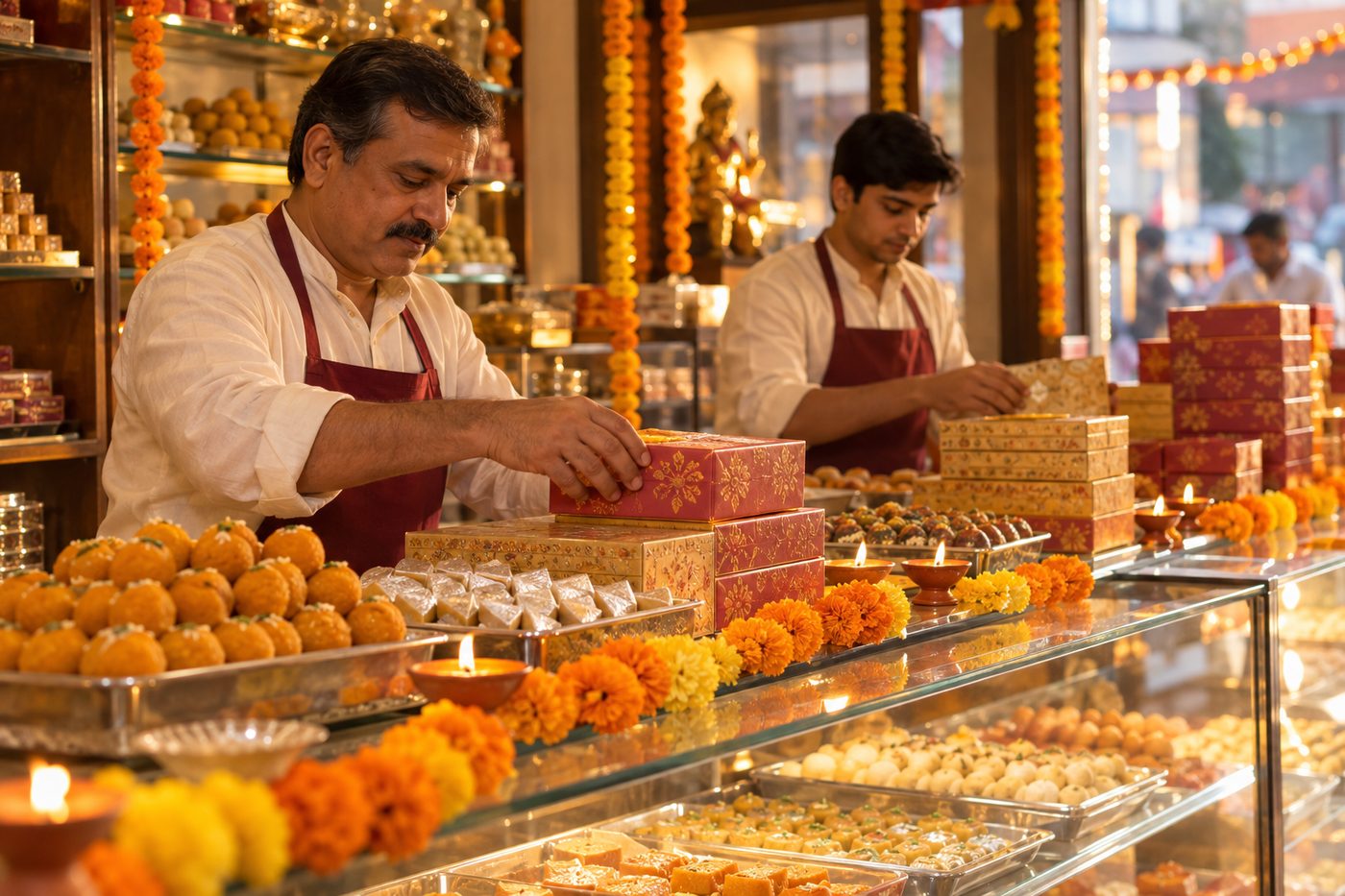
- Your preparations. The sweet shop’s kitchen at 5 am the week before Diwali. The tailor’s queue before Eid. The florist’s stock arriving for Onam. People like seeing the work behind a festival.
- Something useful. A bakery’s order deadline for Christmas cakes. A pharmacy’s opening hours over Diwali. A clinic’s tips on staying safe with firecrackers, or on fasting safely during Navratri, written carefully and in general terms. A school’s holiday schedule.
- Your team celebrating. Staff in festive clothes at the shop, the office decorated, a team lunch. Ask everyone shown for their agreement.
- Your customers’ traditions. Ask a question: “What is the one dish your family must have on Pongal?” Questions invite comments, which is the most useful thing a festival post can get.
- Regional language. A greeting written correctly in Kannada, Tamil, Telugu, Malayalam, Marathi, Bengali or Hindi, for customers who celebrate in that language, means more than the same greeting in English. Have a native speaker check the spelling.
- A short reel. Fifteen seconds of lamps being lit, a counter being decorated or the first customer of the day often does better than a designed graphic.
Step 4: Offers, done honestly
A festival offer can bring real business, and it is also where many small businesses get into trouble with customers.
- State the terms in the post: what is included, the price or discount, the dates, and any limits.
- ”Free” must mean free. If there are conditions, say them clearly in the same post.
- Do not inflate a “before” price to make a discount look larger.
- Do not claim scarcity you do not have (“only 3 left!”) or a deadline you will extend.
- Healthcare businesses should be especially careful: the NMC’s advertising guidelines restrict discounts, limited-period offers, contests and free check-ups that could encourage unnecessary tests or treatment, so state packages and fees factually instead. Festival and national-day greetings are fine without advertising in them. Our guide to healthcare posts and the NMC rules covers this.
Step 5: Keep the everyday plan running
Festival posts sit on top of your normal plan; they should not replace it. In a festival month, keep the regular rhythm going (products, services, tips, answers to customers’ questions) and let the festival posts take two or three of the slots. Our guide to planning a month of posts shows how to build that base plan.
A planning table you can copy
Fill in one row for each day you choose:
| Day | This year’s date | Why it matters to our customers | Post idea | Offer and terms (if any) | Photos needed | Holiday hours | Approved by |
|---|
Keep last year’s table. After each festival, write one line about what got comments, calls or orders. Next year’s plan starts from that.
Where Baila Lento fits
Every week Baila Lento suggests post ideas for your business, including festivals and the days that matter to your customers. You turn the ones you like into requests with one click, and every post waits for your approval before it goes out.
Questions people ask
How many festival posts should a small business make in a year?
Usually eight to twelve days done properly is enough: the major festivals your customers celebrate, one or two regional days, and a few awareness or professional days tied to your field. Fewer, better posts beat a greeting for every date.
How far ahead should I plan festival posts?
About three weeks ahead. That gives time to decide on an idea and any offer, take real photos, write and approve the posts, and update your holiday hours on Google and your website.
Should I post festival greetings in regional languages?
If your customers celebrate in that language, yes. A correct greeting in Kannada, Tamil, Marathi or another language is more personal than English. Have a native speaker check the spelling before it goes out.
Why do festival dates change every year?
Many Indian festivals, including Diwali, Holi, Eid and Ganesh Chaturthi, follow lunar calendars, so their dates on the Gregorian calendar move each year. Always check the current year’s date before planning.